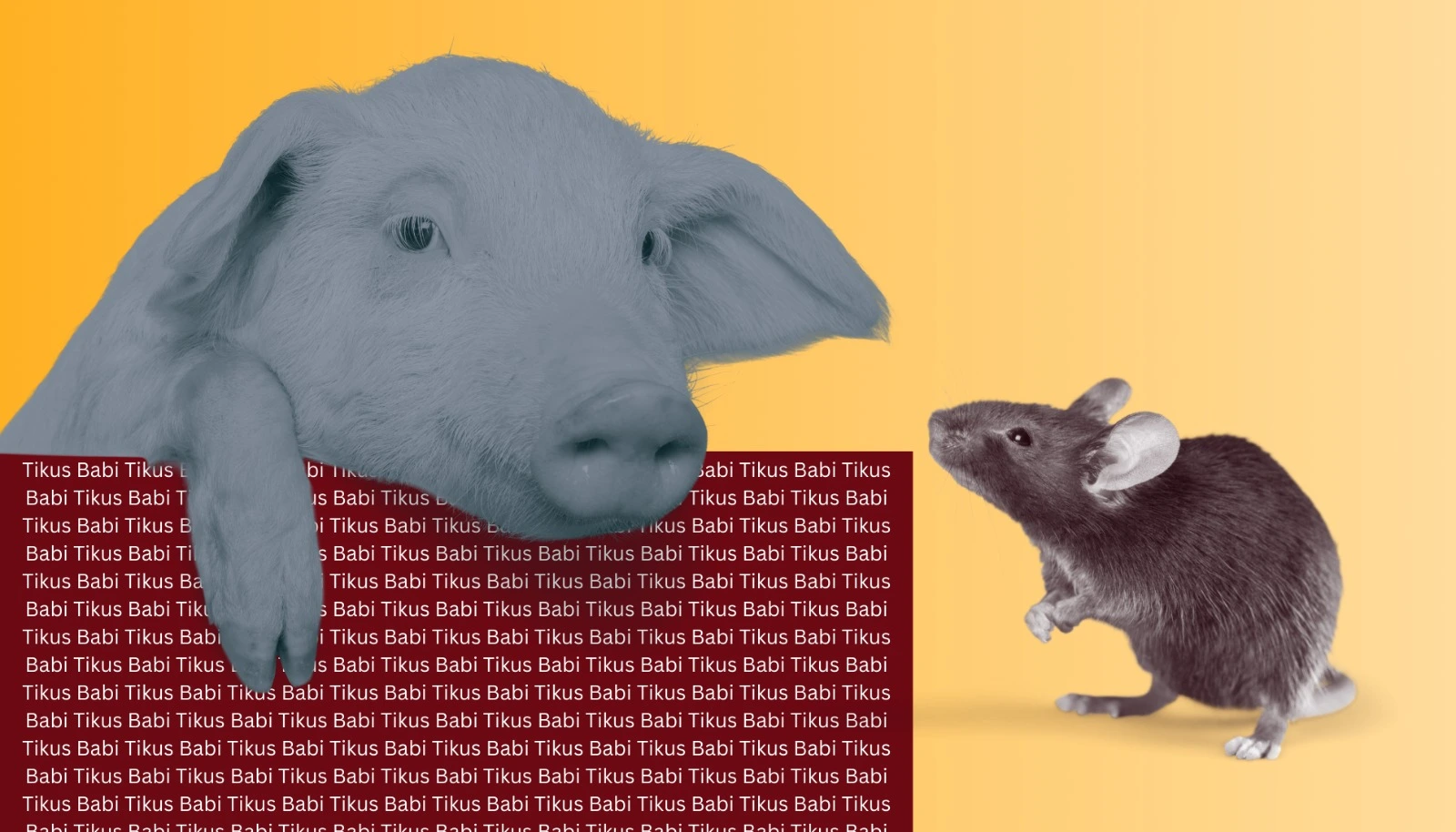
According to Muhid (2025), some time ago within a span of four days, the Tempo Media Office experienced a series of terror attacks that amounted to intimidation against press freedom. The first terror came in the form of a package containing a pig’s head without ears sent to the Tempo office and addressed to political journalist and host of the Bocor Alus podcast, Francisca Christy Rosana. Two days later, Tempo received another package containing six decapitated rats, allegedly linked to the number of hosts of the Bocor Alus Politik podcast.
In addition to physical threats, Tempo also faced digital attacks in the form of doxxing against Francisca Christy Rosana. The social media account @derrynoah exposed Francisca’s personal data, spread hate speech, and threatened further action if Tempo continued to report on politics with perspectives deemed provocative.
These attacks sparked widespread condemnation from various parties, including the National Commission on Human Rights (Komnas HAM), which categorized them as violations of human rights. This case serves as a reminder that press freedom in Indonesia still faces serious threats, and protecting journalists must be a priority for law enforcement and society as a whole. So, what does all this really mean?
Let us try to dissect the terror aimed at Tempo using a semiotic approach, examining how the symbols involved carry hidden meanings related to social, cultural, and historical contexts.
Introduction: Reading Terror Through a Semiotic Lens
In the field of communication, every action, symbol, and message holds a deeper meaning beyond its physical form. The terror targeting Tempo—featuring a pig’s head, dead rats, and the doxxing of one of its journalists—is not just an ordinary threat. Rather, it reflects an attempt to intimidate press freedom, one of the pillars of democracy in Indonesia. But what if we see this incident not merely as a direct attack, but interpret it through semiotics?
According to Ferdinand de Saussure (The Information Architects of Encyclopaedia Britannica, 2025),
semiotics is the study of systems of signs that help us understand how meaning is constructed. He divides signs into the signifier, the physical form of a symbol, and the signified, the meaning associated with it. In this case, the pig’s head, the dead rats, and the act of doxxing are not merely physical objects; they are signs carrying specific messages within social and political contexts.
In various countries, similar symbols have been used in political and criminal intimidation strategies. In Italy, the mafia often sends animal heads to their enemies as warnings. In Mexico, drug cartels use similar symbols to instill fear (Harras, 2025). Authoritarian regimes also frequently use these methods to silence dissent and control political narratives.
So, what if we reinterpret this incident through a semiotic lens? What hidden meanings lie in each element of this attack? And perhaps more importantly, what message were the perpetrators trying to send to Tempo and the wider public? Is this merely a random act of terror, or is there a larger political message behind it? Let’s examine this further.
The Earless Pig’s Head

Image source: Muhid, 2025
Physically, a pig’s head is simply a body part of an animal. Pigs are often associated with celebrations and prosperity in many cultures—such as festive dishes in Spain and the Philippines or symbols of good fortune in China.
However, in many social, political, and cultural contexts, it becomes a symbol of humiliation, threats, and psychological terror.
Ferdinand de Saussure explains that each sign consists of two main components:
-
Signifier: the physical form (the pig’s head)
-
Signified: the meaning associated with it based on cultural and social interpretation
When applying this concept to the Tempo terror case, the pig’s head as the signifier is merely a physical object. But culturally and socially, it carries multiple layers of meaning.
Meanings of the Pig’s Head in Cultural and Historical Contexts
1. A Symbol of Humiliation
In many cultures—especially within Islamic and Jewish traditions—the pig is considered unclean or forbidden. Thus, sending a pig’s head can be interpreted as an attempt to insult or degrade someone, especially if the target belongs to a group that avoids pigs due to religious or moral reasons.
However, in this case, the target is Francisca Christy Rosana, a non-Muslim woman. This suggests that the message might not rely solely on religious symbolism, but could also attack her gender or her role as an investigative journalist exposing sensitive political issues.
2. A Threat or Form of Intimidation
A pig’s head is also commonly associated with criminal intimidation. In some countries, mafia groups send pig heads as warnings to silence their targets.
Sending a pig’s head without ears likely symbolizes “Do not listen; stop speaking.”
3. Symbol of Corruption and Moral Decay
In several political cultures, pigs are also used to describe greed and corruption. This could be an ironic message aimed at journalists uncovering corruption that certain actors want to hide.
Historical Precedents of Similar Terror
1. Italian Mafia
The Sicilian mafia has long used animal heads, particularly pigs and horses, as symbols of threats (Yulianingsih, 2024).
2. Mexican Drug Cartels
Journalists in Mexico have been threatened with animal remains before experiencing violence (Jati, 2021).
3. Religious and Racial Intimidation
Extremist groups in Europe have placed pig heads in front of mosques as attacks against Muslims (Kristina, 2024).
The Terror of Six Rats

Image source: Suhendra (2025)
Rats carry diverse meanings across cultures, depending on the context. In some cultures, rats are considered symbols of cunning, survival, and cleverness due to their ability to adapt and reproduce quickly. In Chinese mythology, for example, the rat is one of the zodiac animals that represents intelligence and agility (Xinhua, 2020). However, in many other cultures, rats hold negative connotations—symbolizing filth, disease, destruction, and even betrayal.
In modern urban contexts, rats are often associated with dirty environments, diseases such as the plague (Black Death), and poor living conditions (The Information Architects of Encyclopaedia Britanica, 2025). Additionally, in English, the word “rat” is often used to refer to a traitor, especially in the realms of crime and politics. Terms such as “snitch” or “ratting out” in criminal slang indicate that someone has leaked important information to authorities, thereby becoming a threat to a particular group.
According to Ferdinand de Saussure’s semiotic theory, every sign consists of two main components:
-
Signifier: the physical form of the sign—in this case, the rat carcasses sent in the terror package.
-
Signified: the meaning associated with the sign, which can vary depending on social, cultural, and historical contexts.
In the terror case targeting Tempo, the dead rats may serve as a metaphor that someone or a group is being viewed as a traitor or a threat that needs to be eliminated. By severing the rats’ heads, the perpetrators may have intended to send a message that they want to “silence” or “remove” their target—namely, the journalist they believe is exposing something they want to keep hidden.
Furthermore, the six rats sent may also carry additional meaning. Numbers often have symbolic significance in various cultures and belief systems. The number six can have positive or negative connotations depending on the context. In numerology, six represents harmony, balance, and responsibility. However, in certain contexts, it can also be associated with darker elements—for example, in Western culture, the combination 666 is often seen as a symbol of destruction or evil.
If a single dead rat could be interpreted as a message of insult or warning to an individual, then six dead rats may be interpreted as a collective act of terror—indicating that the threat is not directed at just one person, but at a larger group.
Thus, the dead rats function as a symbol of humiliation, and the number six serves as a coded threat. It can be said that this form of terror is a systematic attempt aimed at silencing media outlets that take a critical stance toward those in power.
Historical Parallels
1. Mafia Threats to Informants
Dead rats are commonly used as warnings to “snitches.”
2. Russian Political Propaganda
Oppositions have been symbolically framed as rats to dehumanize and intimidate them.
3. Threats Against Journalists in Latin America
Animal remains are used as preludes to violent attacks.
Conclusion: Terror as Symbolic Communication
Terror is not just physical violence—it is a symbolic communication strategy. By understanding the symbols used, we can see that the pig’s head and dead rats are meant not only to threaten individuals but also to:
-
intimidate the press
-
control public narratives
-
suppress critical voices
Semiotics allows us to read these acts as deliberate messages within political and cultural contexts. Similar practices across the world show that these tactics are commonly used by criminal groups, authoritarian regimes, and political actors seeking to silence dissent.
FactMeter firmly condemns all forms of intimidation against journalists and press freedom. Violence and threats toward the media cannot be justified in a healthy democratic society. Everyone must play a role in defending free expression and protecting independent journalism from all forms of pressure and terror.
Salam Pers!
Reference
- Muhid, H. K. (2025, 25 Maret). 4 Hari 3 Teror Dialami Tempo: Paket Kepala Babi, Bangkai Tikus, dan Doksing Wartawan. TEMPO Hukum. https://www.tempo.co/hukum/4-hari-3-teror-dialami-tempo-paket-kepala-babi-bangkai-tikus-dan-doksing-wartawan–1223881.
- The Information Architects of Encyclopaedia Britannica (2025, 29 March). linguistics. Encyclopedia Britannica. https://www.britannica.com/facts/linguistics.
- Harras, K. (2025, 23 Maret). Semiotika Teror “Kepala Babi” dan “Bangkai Tikus”. Kompasiana. https://www.kompasiana.com/amp/kholidharras9397/67e01271c925c478d32ffe72/semiotika-teror-kepala-babi-dan-bangkai-tikus.
- Yulianingsih, T. (2024, 24 November). Kala Bangkai Kepala Kuda dan Sapi Hamil Jadi Taktik Ancaman Mafia Sisilia. Global Liputan6com. https://www.liputan6.com/global/read/5802769/kala-bangkai-kepala-kuda-dan-sapi-hamil-jadi-taktik-ancaman-mafia-sisilia.
- Jati, H. (2021, 15 Oktober). Sadis, Kartel Narkoba Meksiko Kirim Kepala Terpenggal ke Kepala Polisi Baru sebagai Ancaman. KompasTV. https://www.kompas.tv/internasional/222008/sadis-kartel-narkoba-meksiko-kirim-kepala-terpenggal-ke-kepala-polisi-baru-sebagai-ancaman.
- Kristina (2024, 1 April). Masjid di Prancis Diteror Kepala Babi Hutan. detikHikmah. https://www.detik.com/hikmah/khazanah/d-7272370/masjid-di-prancis-diteror-kepala-babi-hutan.
- Suhendra. (2025, 22 Maret). Aksi Teror, Tempo Kembali Dapat Kiriman Bangkai Hewan Kali ini Tikus yang Dipenggal.
https://www.suarakalbar.co.id/2025/03/aksi-teror-tempo-kembali-dapat-kiriman-bangkai-hewan-kali-ini-tikus-yang-dipenggal/. - Xinhua. (2020, 20 Januari). China Focus: Chinese archaeologists trace history, culture of rat. http://www.xinhuanet.com/english/2020-01/22/c_138727127.htm.
- The Editors of Encyclopaedia Britannica (2025, 27 March). bubonic plague. Encyclopedia Britannica. https://www.britannica.com/science/bubonic-plague