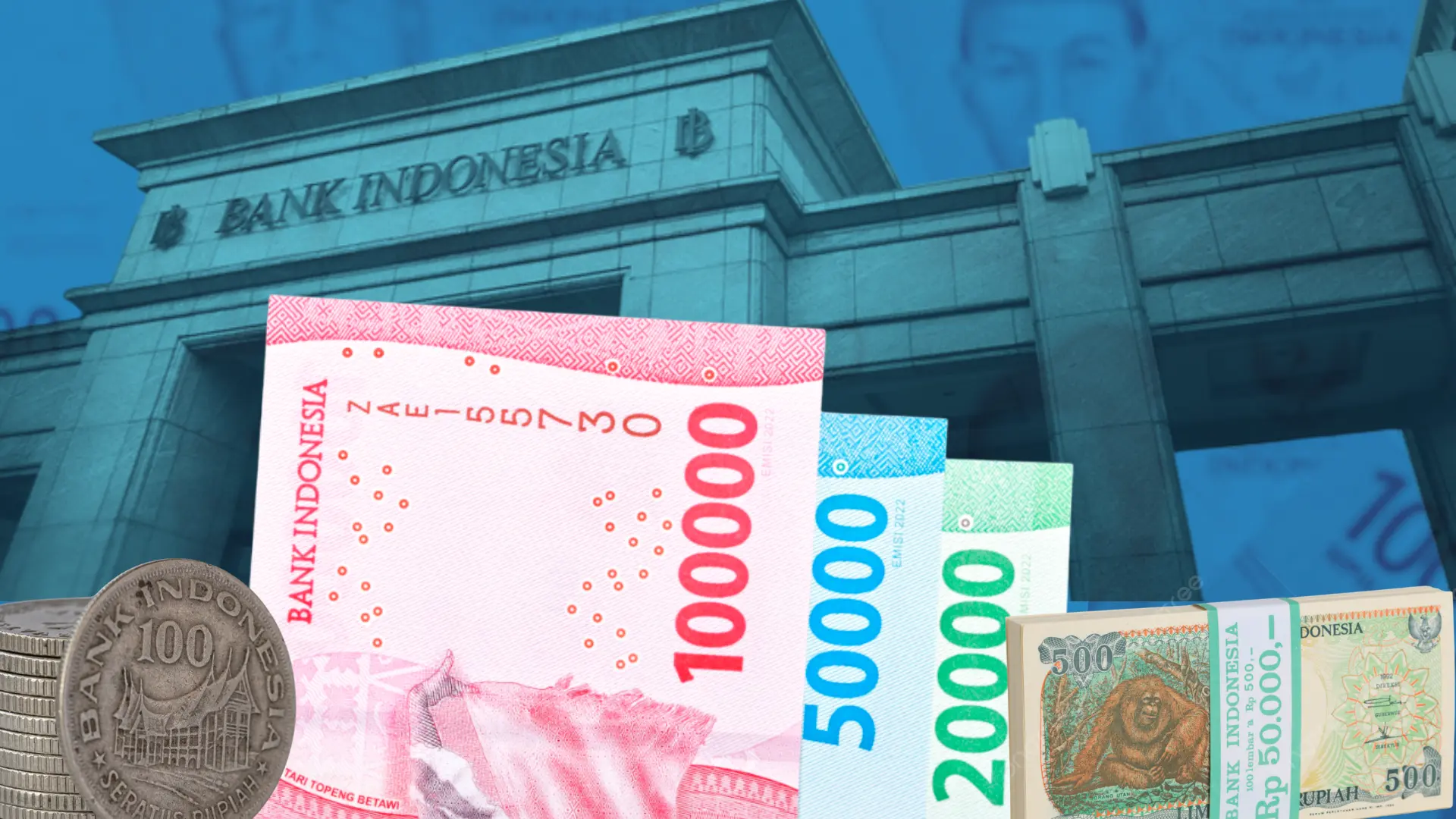
National currency is the most concrete symbol of a country’s sovereignty, representing complete control over the economy and a nation’s ability to govern itself. Therefore, the right to issue its own money is often considered a sign of true independence. In Indonesia, this profound philosophy was embodied in the first introduction of the Oeang Republik Indonesia (ORI). Its issuance was not merely a financial matter, but a political declaration that the Republic of Indonesia existed and stood independently.
Establishing the Republic of Indonesia through ORI
Following the proclamation, the Preparatory Committee for Indonesian Independence (PPKI) moved quickly to organize national life. Fundamental steps such as ratifying the constitution, appointing a national leader, and establishing core ministries were immediately undertaken, including the Ministry of Finance. The country’s territorial layout was also regulated by dividing it into eight provinces. However, despite the progress in politics and governance, a crucial problem lurked: the lack of a national currency. The economy at that time was still dominated by colonial currencies from the Dutch and Japanese eras, while the threat of the Dutch using Netherlands Indies Civil Administration (NICA) currency posed a serious challenge to the Republic of Indonesia’s economic sovereignty.
The first initiative was taken by Minister of Finance A.A. Maramis issued a decisive decree on September 29, 1945. The decree revoked the authority of Japanese officials to issue payment orders and transferred it to the Assistant State Treasurer under the Ministry of Finance. The public was also urged to refuse transactions without an official signature—a political declaration that the Republic of Indonesia had become independent. This was followed by the establishment of three official currencies on October 1, followed by the revocation of the validity of NICA money the following day to prevent Dutch economic domination. On October 3, the government finally established four official currencies. Although fraught with turmoil, this series of policies successfully laid the foundation for the country’s financial system.
On November 7, 1945, Minister of Finance A.A. Maramis formed the Organizing Committee for the Printing of Republic of Indonesia Banknotes, with T.R.B. Sabaroedin of Bank Rakyat Indonesia as chairman. This committee included representatives from the Ministry of Finance, the Ministry of Information, the Indonesian Central Bank (BRI), and the Printing Workers’ Union. The ORI printing process finally began in January 1946, operating at very long hours, although it had to be halted in Jakarta in May 1946 for security reasons. All operations were then moved to several cities in Java, such as Yogyakarta and Malang. Amidst the challenges of war, which made accounting for the money supply and the state’s financial situation extremely difficult, the committee continued its work, printing money, which also served as a diplomatic tool.
The climax came on October 30, 1946, when the first edition of the Republic of Indonesia Currency (ORI) officially entered circulation. This currency, signed by A.A. Maramis, became a symbol of economic sovereignty, even though he had been replaced by Sjafruddin Prawiranegara. The ORI’s design was simple, but its presence meant the Republic now had its own official currency. Holding an ORI at that time was tantamount to raising the national flag; both were undeniable proof that Indonesian independence had become a concrete reality.
The journey to Indonesian sovereignty then began with the Round Table Conference (RTC) held in The Hague in late 1949. The most significant outcome of this conference was the recognition of Indonesian sovereignty, which manifested itself in the formation of the United States of Indonesia (RIS). Consequently, the Minister of Finance was then authorized to issue RIS rupiah currency in May 1950. However, history records that the RIS’s lifespan was short-lived. In August 1950, Indonesia reverted to a unitary state, thus ending the RIS currency’s validity period. Although brief, the existence of the RIS currency became a crucial link in the transition to a more robust Indonesian monetary union.
Entering the 1950s, the government’s focus shifted from war to economic stabilization. Sjafruddin Prawiranegara, now the policy architect, launched the “Sjafruddin Scissors” (Sjafruddin Scissors) in 1951-1952. This controversial policy cut up old banknotes and exchanged them for new ones from De Javasche Bank, as a way to reduce the money supply and curb post-war inflation. The scissors method was chosen because the bank’s accounts were frozen at the time. As a result, the government successfully secured a Rp 1.5 billion loan through the 1950 Republic of Indonesia Bonds. Shortly thereafter, De Javasche Bank was nationalized and officially became Bank Indonesia on July 1, 1953, ending the era of foreign currency dominance and marking the birth of Indonesia’s central bank.
For some time, Indonesia operated a dual monetary system. The Ministry of Finance issued banknotes and coins with denominations under Rp5, while Bank Indonesia (BI) handled larger denominations. This dual system ended with the enactment of Bank Indonesia Law No. 13 of 1968, which granted BI full monopoly rights to print all banknotes and coins. The rationale for this change was to create uniformity and efficiency, as the existence of two different types of currency only caused confusion among the public. Thus, Indonesia finally had a single, stable currency that served as a national monetary symbol.
The meaning of ORI for the current generation
From the history and development of the Indonesian Rupiah (ORI), we can learn three fundamental lessons. First, economic sovereignty is the result of a hard struggle amidst war and blockade, achieved by figures such as A.A. Maramis and Sjafruddin Prawiranegara through the issuance of national currency. Second, monetary stability is a crucial prerequisite for progress, achieved through decisive policies such as Gunting Sjafruddin’s. Third, institutions like Bank Indonesia serve as guardians of the values of independence, not merely bureaucratic institutions.
Amidst global dynamics approaching the end of 2025, from currency fluctuations to digitalization, the lessons from the ORI are particularly relevant. Indonesia has overcome various challenges, from the 1998 crisis to the development of digital currency, with one primary lesson: national currency is an irreplaceable symbol of sovereignty. This serves as a call to the younger generation to continue this struggle by building a stronger financial system. Just as the ORI once united, the rupiah today must remain a unifying tool for the nation.