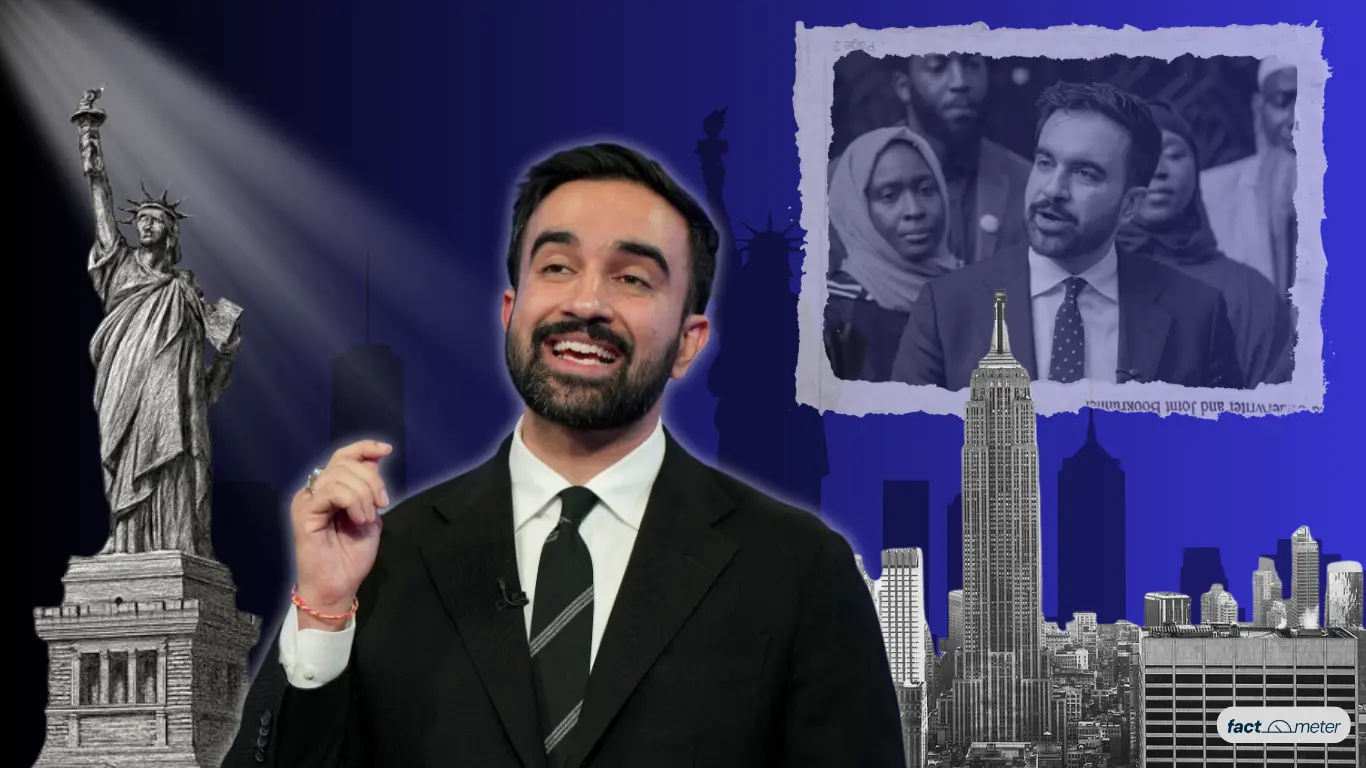
The election of Zohran Mamdani as Mayor of New York City, United States, on November 5, 2025, defeating former New York Governor Andrew Cuomo and Republican candidate Curtis Sliwa with a total of 50.4% of the vote, makes him the first Muslim mayor in the history of New York City.
The 35-year-old man, whose full name is Zohran Kwame Mamdani and who has Indian heritage from his mother and Ugandan heritage from his father, was born in Uganda. He only obtained U.S. citizenship through naturalization in 2018, after moving with his family to New York in 1998.
His political career began after joining the Democratic Party with his democratic socialist leanings. In 2020, Zohran was elected to the New York State Assembly representing District 36, located in the Bedford–Stuyvesant neighborhood of Brooklyn and covering parts of northern Crown Heights, New York.
A Progressive Figure Unlike Any Before
Zohran Mamdani’s victory as the new mayor of New York City has become one of the most notable political events of the year. His identity as a pro-LGBTQ+ and Muslim figure sets him apart from the typical leaders of major American cities. On the positive side, many view Mamdani’s election as an important step forward for minority representation. A city as diverse as New York is now led by someone who reflects that very diversity.
However, this condition can also become a double-edged sword for New York—and even for the United States more broadly. Mamdani’s support for progressive agendas, particularly those related to identity issues and social equality, may trigger resistance from conservative groups. For many Americans who uphold traditional values, Mamdani is seen as misaligned with principles they view as the foundation of national identity. Political pressure from such groups may hinder Mamdani’s agenda and widen the already sharp political divide.
On the other hand, the programs he promotes—such as free public transportation, expanded affordable housing, and stronger social services—have been well received by younger generations and working-class communities. They see Mamdani as a leader offering real solutions to the challenges of high living costs and inequality in the city. Even so, implementing such ambitious agendas will not be easy. New York has a complex bureaucracy and political dynamics that often clash with expansive progressive visions.
Ultimately, Mamdani’s leadership will test America’s ability to embrace change and diversity in a more concrete form. He brings new hope, but also significant political challenges. His success in governing New York will determine whether progressive politics can endure in a global city like New York, or if it will instead spark a backlash from those who feel traditional values are being eroded.
Mamdani’s stance on the Palestinian conflict has been one of the most debated aspects of his political career. He openly supports the BDS movement as a form of non-violent pressure against Israel, arguing that this approach aligns with his belief in the effectiveness of nonviolent action in promoting adherence to international law. Mamdani has also described Israel’s military operations in Gaza as “genocide,” a statement that has made him increasingly popular among pro-Palestinian supporters but has also drawn significant criticism from pro-Israel groups in the U.S. Additionally, he has explained that the slogan “globalize the intifada” represents solidarity with the Palestinian human rights struggle, not a call to violence as some have claimed. This firm stance may become one of the major political challenges during his tenure, especially given the sensitivity of the Palestinian issue in American politics and the important role of the Jewish community in New York.
A Symbol of a New Direction for American Democracy
Mamdani’s leadership is shaping up to be a large-scale political experiment. Can a multicultural city like New York be led by a radically progressive figure without triggering turmoil? Can minority representation translate into effective governance? Or will this change instead provoke a counter-movement from groups who feel threatened? These questions make his administration not just a local story, but a reflection of broader dynamics within American democracy.
In the end, Zohran Mamdani’s leadership will illustrate how New York—perhaps even the United States as a whole—handles increasingly complex social and political dynamics. He brings an ambitious progressive agenda, firm stances on sensitive issues, and an identity that represents the diversity of the city he leads. Yet all of this comes with no small amount of challenges. His success will depend on his ability to balance idealism with everyday governance while maintaining open dialogue within an increasingly polarized society. Thus, his administration will not only mark a significant chapter in his political career but also serve as an important indicator of the trajectory of American democracy in the years to come.
References
- https://tirto.id/apakah-zohran-mamdani-pro-palestina-cek-fakta-hlbD
- https://www.tempo.co/infografik/infografik/zohran-mamdani-wali-kota-muslim-pertama-new-york-2087324
- https://international.sindonews.com/read/1588541/42/calon-wali-kota-muslim-new-york-zohran-mamdani-dan-kontroversi-slogan-intifada-1751616424
- https://www.jawapos.com/internasional/016804986/zohran-mamdani-wali-kota-muslim-pertama-yang-mengguncang-new-york-dengan-janji-bus-gratis