Image source: GettyImage/Tracey Nearmy
Note: This article reflects the author’s personal opinion and does not represent the views of the Fact-Meter.com Editorial Board.
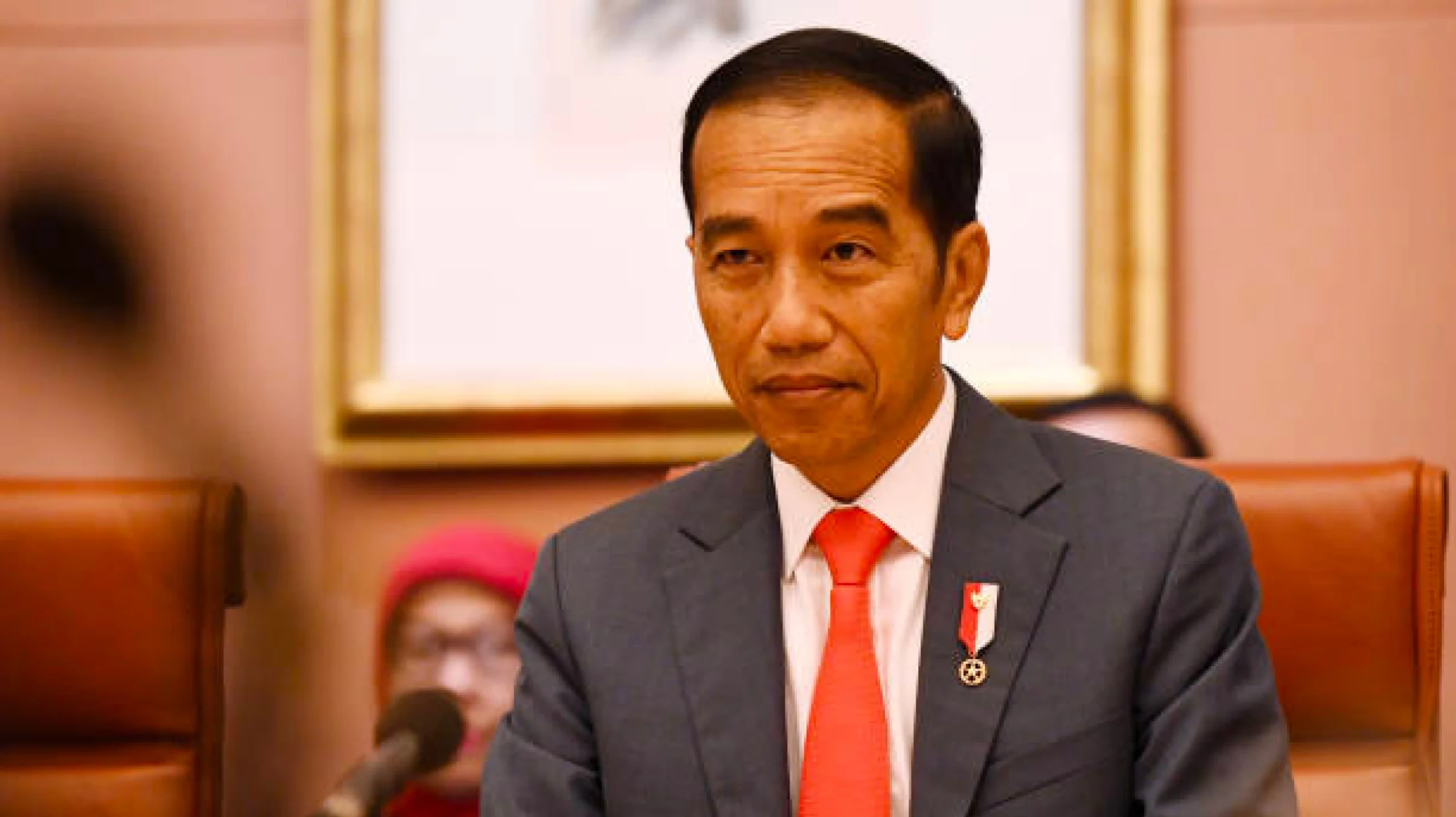
At the end of 2023, ahead of the 2024 presidential election, Jokowi staged his ultimate political show. After nearly twenty years as a PDIP cadre, this is the first time he has demonstrated a monumental political move that breaks the long-standing accusation that he is merely a puppet president.
Such accusations were easy to direct at him, considering Jokowi is the only Indonesian president who did not come from an elite political party background and was not an army general. Many therefore assumed that this furniture businessman from Solo would be powerless when faced with PDIP’s strong hegemony—where everyone knows that sami’na wa atho’na (we hear and we obey) is the basic attitude expected from every cadre when dealing with the party’s supreme leader, Megawati.
Now, the party that has never changed its chairperson since the 1998 Reformation has lost Jokowi as one of its key political assets in facing the upcoming presidential election in February next year. Jokowi has left PDIP. Although physically he remains a cadre, his spirit no longer resides there. More than merely leaving, he has challenged Megawati by “placing” his children in the ranks of the Advanced Indonesia Coalition (Koalisi Indonesia Maju), which supports Prabowo Subianto as presidential candidate—directly positioning them against the party symbolized by the white-snouted bull.
Just look at how his youngest son, Kaesang Pangarep, carved out his own political history by becoming chairman of the Indonesian Solidarity Party (PSI), part of the same coalition, after only two days as a party member. His eldest son, Gibran Rakabuming, is running in the 2024 presidential election as Prabowo’s vice-presidential candidate, immediately after the Constitutional Court allowed individuals under 40 to run for president or vice president as long as they currently hold or have previously held an elected office. Meanwhile, his son-in-law, Bobby Nasution, declared his support for the Prabowo–Gibran pair through the Declaration of the Entrepreneurs’ Fighters Front last November.
So, how was Jokowi’s political maneuver received? Panda Nababan, who has consistently criticized Jokowi’s administration since his first term, called Gibran—Prabowo’s VP candidate—an “inexperienced kid.” Rocky Gerung described Kaesang’s appointment as PSI chairman as a moment “when the professionals (PSI) suddenly became servants.” PDIP’s Medan City Branch Executive Board sent a notification letter to Bobby, stating that the Medan mayor had been proven to violate the party’s code of ethics and discipline by failing to comply with party rules and decisions for supporting a presidential–vice-presidential pair backed by another political party. Ganjar Pranowo, who previously positioned himself as Jokowi’s successor, has now shifted to the opposition, criticizing the government over issues such as losses at state-owned construction companies and alleging government interference to secure victory for certain candidate pairs. Ganjar even clearly stated, “Pak Jokowi is no longer with us” in a talk show hosted by kumparan.com.
“Pak Jokowi is no longer with us.” Years ago, before the loud drumroll of the 2024 election, could any of us have imagined that this statement would come from one of Jokowi’s close colleagues in PDIP? Even in the minds of Jokowi’s harshest critics, it would have been difficult to picture someone they regarded as a party puppet president making such a bold political maneuver. Jokowi’s “blessing” for his children to take political steps in direct opposition to the party that raised him seems unthinkable. Not because it is naïve, but because such a political move is so hard to associate with Jokowi’s identity—long seen as an obedient and compliant party cadre.
Is Jokowi’s desire to counter PDIP really that strong? And if so, why? What internal knowledge does he possess about his own party that has driven him to try to prevent PDIP’s potential three-peat victory in the 2024 election?