Image source: detikNews
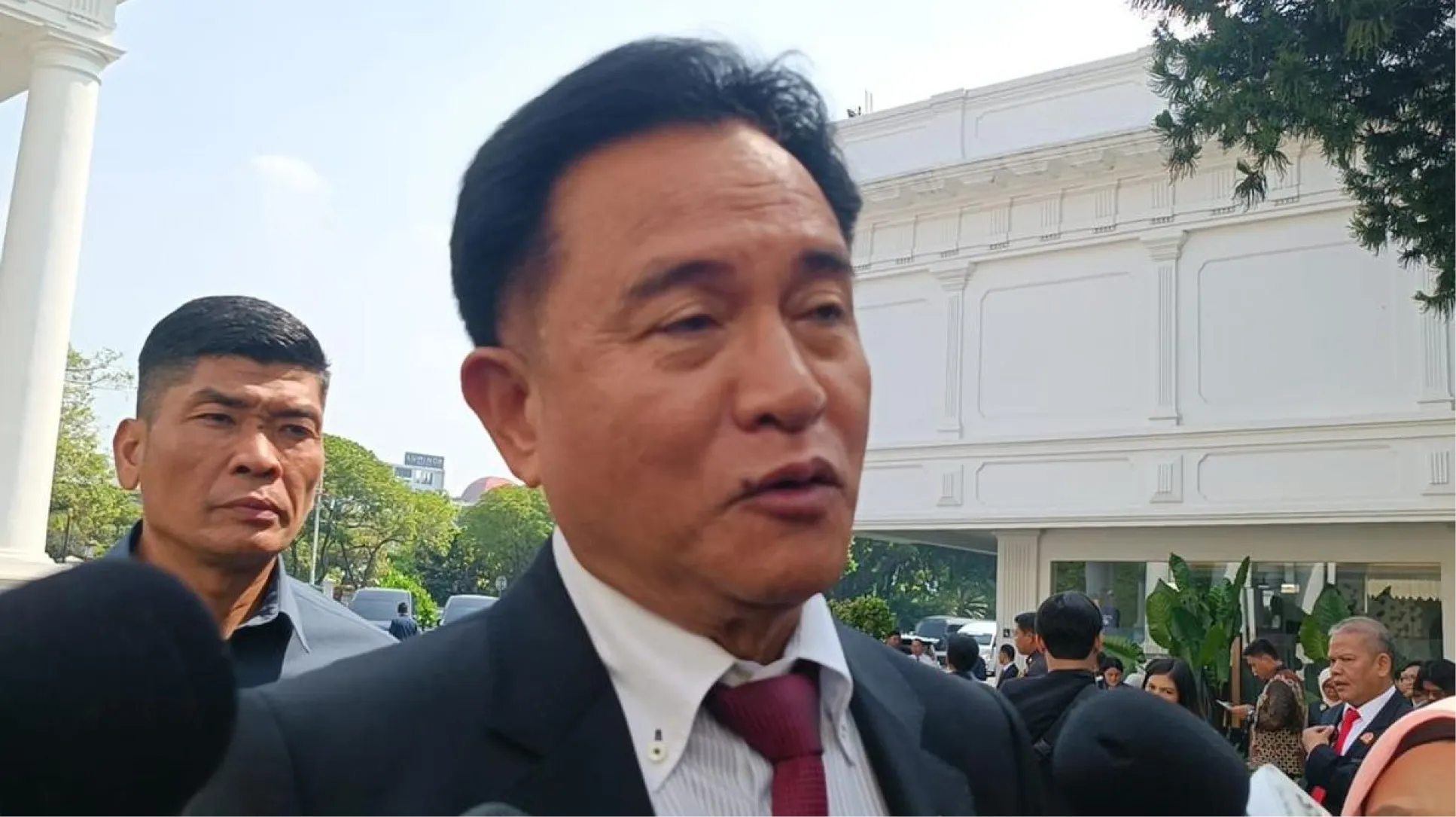
The Red and White Cabinet has just been formed. Within the cabinet led by President Prabowo Subianto and Vice President Gibran Rakabuming Raka, Coordinating Minister for Law, Human Rights, Immigration, and Corrections, Yusril Ihza Mahendra, made a statement regarding human rights violations in Indonesia (October 21, 2024) after his inauguration. Yusril claimed that the May 1998 Tragedy was not considered a gross human rights violation in Indonesia. “Gross human rights violations are genocide and ethnic cleansing, and they haven’t occurred in recent decades. (The 1998 Tragedy) isn’t considered one,” said Yusril (Makdori, 2024). So, is it true that the May 1998 Tragedy is not considered a gross human rights violation in Indonesia? What cases are considered gross human rights violations in Indonesia? The FactMeter team summarizes these cases from various sources below.
According to the website of the Ministry of State Secretariat of the Republic of Indonesia regarding the Presidential Press Statement on Gross Human Rights Violations and President Jokowi’s Deplore on Human Rights Violations in the Country, published on January 11, 2023, the President of the Republic of Indonesia, based on Presidential Decree Number 17 of 2022, clearly stated that there were 12 gross human rights violations that occurred in Indonesia, including the May 1998 Riots, the Enforced Disappearances of 1997-1998, and the Trisakti and Semanggi 1 and 2 Incidents of 1998 and 1999. The following is a list of gross human rights violations in Indonesia as presented by the President of the Republic of Indonesia in 2023:
- 1965-1966 Incidents;
- Mysterious Shooting Incidents of 1982-1985;
- Talangsari Incident, Lampung 1989;
- Rumoh Geudong and Sattis Post Incidents in Aceh 1989;
- The Enforced Disappearances of 1997-1998;
- The May 1998 riots;
- The Trisakti and Semanggi 1 and 2 incidents of 1998 and 1999;
- The Witch Doctor Murders of 1998-1999;
- The Simpang KKA incident in Aceh in 1999;
- The Wasior incident in Papua in 2001-2002;
- The Wamena incident in Papua in 2003; and
- The Jambo Keupok incident in Aceh in 2003.
Meanwhile, citing an article published on September 29, 2023, Komnas HAM (National Commission on Human Rights) on the website komnasham.go.id, stated that gross human rights violations are its priority. In Indonesia there were 17 cases of gross human rights violations that occurred, including the 1965-1966 Incident, the Mysterious Shootings of 1982-1985, Talangsari 1989, Trisakti, Semanggi I and II, the May 1998 Riots, the Enforced Disappearances of 1997-1998, Wasior 2001-2002, Wamena 2003, the Murder of a Witch Doctor 1998, the Simpang KAA Incident 1999, Jambu Keupok 2003, Rumah Geudong 1989-1998, Timang Gajah 2000-2003 and the Paniai Case 2014. All of these incidents have been investigated by the National Commission on Human Rights. Of the dozens of incidents that have been investigated, the National Commission on Human Rights stated that four incidents, namely, East Timor, Tanjung Priok, Abepura and Paniai, have had court decisions. Although the results have not yet provided justice for the victims.
What is meant by Gross Human Rights Violations?
According to the Explanation of Article 104 paragraph (1) of the Human Rights Law, “gross human rights violations” are mass killings (genocide), arbitrary or extrajudicial killings, torture, enforced disappearances, slavery, or systematic discrimination. Meanwhile, in the Human Rights Court Law, gross human rights violations are defined as genocide and crimes against humanity.
Who Has the Authority to Judge Past Gross Human Rights Violations?
The ad hoc Human Rights Court has the authority to hear cases of gross human rights violations that occurred before 2000. The ad hoc Human Rights Court has the authority to examine and rule on gross human rights violations that occurred before the enactment of the Human Rights Court Law. This ad hoc Human Rights Court is within the general court system and is established upon the recommendation of the House of Representatives (“DPR”) based on specific events and by presidential decree.
The process or mechanism for establishing an ad hoc Human Rights Court is not clearly regulated in the Human Rights Court Law. However, based on the experience of establishing an ad hoc human rights court in the East Timor and Tanjung Priok cases, the process is as follows:
- An investigation by the National Commission on Human Rights (Komnas HAM) into allegations of past gross human rights violations;
- The results of the investigation are submitted to the Attorney General’s Office, which conducts an investigation;
- The results of the Attorney General’s investigation are submitted to the President;
- The President sends a letter to the House of Representatives (DPR), which then issues a recommendation letter to the government proposing an ad hoc human rights court with a specific timeframe and locus delicti;
- The President issues a presidential decree on the establishment of an ad hoc human rights court.
As reported by hukumonline.com (2022), in addition to judicial mechanisms, resolution of past gross human rights violations is also carried out through non-judicial mechanisms. This is stipulated in Presidential Decree 17/2022 concerning the establishment of a non-judicial team for the resolution of past gross human rights violations (“PPHAM”).
Article 3 of Presidential Decree 17/2022 mandates the Human Rights and Human Rights Monitoring Team (PPHAM) to:
- disclose and seek non-judicial resolution of past gross human rights violations based on data and recommendations established by the National Commission on Human Rights (Komnas HAM) through 2020;
- recommend reparations for victims or their families; and
- recommend steps to prevent future gross human rights violations.
The PPHAM Team then made 11 recommendations to the president, including acknowledging and regretting past gross human rights violations, re-registering victims, restoring victims’ rights, and more.
Reference
- Safitri, E. (2024, October 22). Yusril Klarifikasi Pernyataan Tragedi 1998 Bukan Pelanggaran HAM Berat. Detiknews. https://news.detik.com/berita/d-7600362/yusril-klarifikasi-pernyataan-tragedi-1998-bukan-pelanggaran-ham-berat
- Makdori, Y. (2022, June 14). Gabung Kabinet Prabowo-Gibran, Yusril Sebut Tragedi 1998 Bukan Pelanggaran HAM Berat. Asumsi. https://asumsi.co/post/96074/gabung-kabinet-prabowo-gibran-yusril-sebut-tragedi-1998-bukan-pelanggaran-ham-berat/
- Pernyataan Pers Presiden RI tentang Pelanggaran HAM Berat. (2023, January 11). Kementerian Sekretariat Negara. https://www.setneg.go.id/baca/index/pernyataan_pers_presiden_ri_tentang_pelanggaran_ham_berat
- Humas Kementerian Sekretariat Negara. (2023, January 11). Presiden Jokowi Sesalkan Terjadinya Pelanggaran HAM Berat di Tanah Air. Kementerian Sekretariat Negara. https://setneg.go.id/baca/index/presiden_jokowi_sesalkan_terjadinya_pelanggaran_ham_berat_di_tanah_air
- Jadi Perbincangan Nasional, Pelanggaran HAM yang Berat Prioritas Bagi Komnas HAM. (2023, September 29). Komisi Nasional Hak Asasi Manusia – KOMNAS HAM. https://www.komnasham.go.id/index.php/news/2023/9/29/2419/jadi-perbincangan-nasional-pelanggaran-ham-yang-berat-prioritas-bagi-komnas-ham.html
- Hukum Online. (2022). Keputusan Presiden Nomor 17 Tahun 2022. Pusat Data Hukumonline. https://www.hukumonline.com/pusatdata/detail/lt632b09225d47e/keputusan-presiden-nomor-17-tahun-2022?utm_source=website&utm_medium=internal_link_klinik&utm_campaign=keppres_17_2022
- Auli, R. C. (2023, December 20). Pelanggaran HAM Berat dalam Pasal 104 UU HAM. Klinik Hukumonline. https://www.hukumonline.com/klinik/a/pelanggaran-ham-berat-dalam-pasal-104-uu-ham-lt6582aab55574e/