(image source: detik.com)
The month of Sura is known as an iconic moment in Javanese culture, with various traditions and beliefs passed down through generations. The month of Sura marks the beginning of the new year according to the Javanese calendar, coinciding with the Islamic New Year. One of the most closely associated celebrations during this month is the tradition of Malam 1 Sura (or Malam Satu Suro in Javanese). Malam 1 Sura is the first night of the Javanese calendar, coinciding with the first night of Muharram in the Islamic calendar.
The month of Sura is also filled with myths and urban legends. One prominent tradition in the month of Sura is the ruwatan ritual, which is steeped in spiritual and cultural values. The FactMeter team sought to explore the facts about the history of the month of Sura and the ruwatan tradition, and clarify the myths surrounding it. This way, we can understand the true meaning of this tradition and gain a deeper appreciation for the richness of Javanese culture.
What is the month of Sura?
The month of Sura is a time filled with rituals and traditions steeped in meaning. Some of these include:
- Sesaji Suro: An offering of Suro porridge is prepared to commemorate “Sangkaning Dumadi,” the origin of human life. During this ritual, people often fast by abstaining from food derived from living creatures, such as replacing rice with vegetables.
- Ruwatan: A ritual to cleanse oneself of all bad luck and negative energy. This process involves prayers in Kawi and Sanskrit, such as the Prayer of Raja Kala Cakra and the Prayer of Caraka Balik. Ruwatan takes various forms, such as Ruwat Negari for the nation, Ruwat Kota for cities, and Ruwat Desa for villages. Mass Ruwatan are also held on specific dates to cleanse large numbers of people at once.
- Jamas Pusaka: Palace heirlooms are cleansed in the Jamas Pusaka ritual, either individually or in a mass setting. This ritual is led by an expert elder, with the aim of preserving and blessing the heirlooms, which are considered sacred.
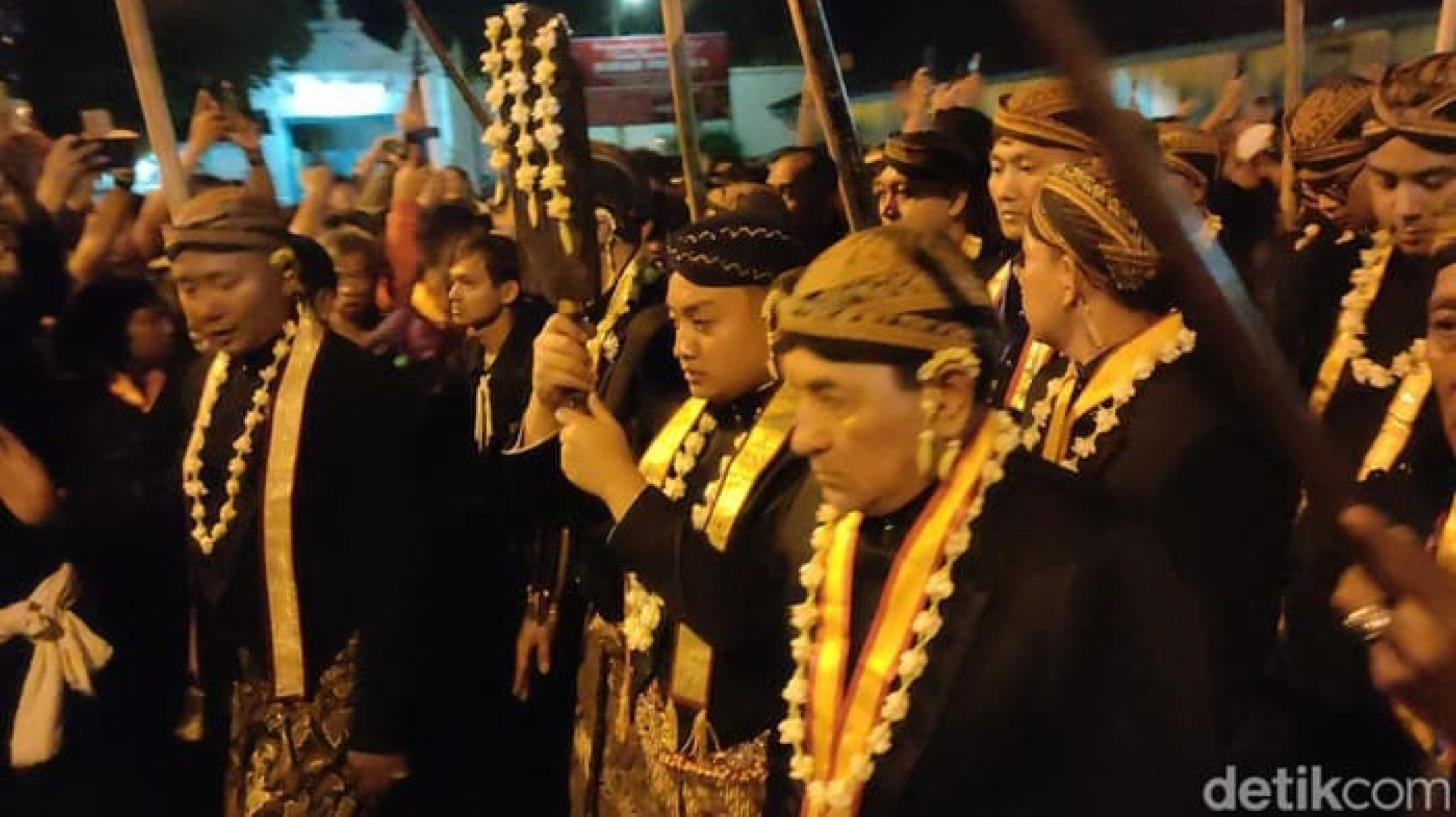
- Heirloom Parade in Surakarta and Yogyakarta: The Kasunanan Surakarta and Mangkunegaran held heirloom parades alongside the Tapa Bisu procession as part of their annual tradition. According to Kompas.com, the Tapa Bisu ritual involves walking while meditating silently. Tapa Bisu has its own philosophy, namely silence as a sign of drawing closer to God while reflecting on all past actions and words.
- Heroes’ Cemetery Pilgrimage: People visit the graves of heroes to pray and honor their services. This pilgrimage also serves as a form of respect for ancestors and the history of struggle.
- Nyadaran to Ancestral Graves: Pilgrimages to ancestral graves, or “nyadaran,” are conducted to honor and pray for the spirits of ancestors. This is a form of respect for lineage and family history.
The Birth of Javanese Culture and Spirituality
The month of Sura is interpreted as the birth of Javanese culture. The process of human creation is described in the following stages: Eko Kamandani (one month), Dwi Panunggil (two months), Tri Lokomoyo Jati (three months), Catur Hanggajati (four months), Panca Yitma Jati (five months), Sakluko Jati (six months), Sapto Kawasa Jati (seven months), Hasta Sabda Jati (eight months), Pasa (nine months), Badha (nine months and ten days, the birth of a baby). Each stage is celebrated and celebrated.
Ruwatan as a Spiritual Culture
Ruwatan is a purely cultural and spiritual tradition, without any particular religious elements. This process emphasizes the values of sincerity and acceptance (lila legowo), as well as cultural preservation (uri-uri budaya). Although not mandatory, faith and sincerity in undergoing ruwatan are key. The Indonesian Supreme Council of Beliefs (MLKI) has held mass ruwatan ceremonies for approximately 14 years, with extraordinary public enthusiasm. This event was attended by various groups, not only from East Java but also from other regions.
Ruwatan is a form of Javanese cultural heritage that remains relevant today, serving as a means for people to cleanse themselves of bad luck and seek blessings and prosperity in life. Ruwatan, with all its rituals and prayers, is an important part of Javanese efforts to maintain spiritual balance and honor the cultural heritage passed down by their ancestors.
Ruwatan can be performed at any time of the year, but many Javanese people find it more sacred to perform it during the month of Sura, as it is considered sacred.
Ruwatan Process and Rituals in Javanese Culture
Ruwatan is an important tradition in Javanese culture that aims to remove bad luck and all forms of unkindness from individuals or groups. This ritual uses special prayers in Kawi and Sanskrit, which are believed to possess high spiritual power. Ruwatan comes from the word “ruwat,” meaning to be kept away from all bad luck. There are several types of ruwatan known in the community:
- Ruwat Negari: Prayers to keep the country away from bad luck.
- Ruwat Kota: Prayers for the well-being of the city.
- Ruwat Desa: Prayers for the well-being of the village.
- Ruwatan Massal: A collective ritual performed to cleanse many people at once, usually held on a specific date.
Ruwatan itself involves various other rituals, such as:
- Wayangan: A shadow puppet performance led by a special puppeteer. Not all puppeteers have the courage and ability to perform ruwat, as this procession requires determination and deep spiritual preparation. The puppeteer leading the ruwatan usually fasts and meditates for a week beforehand. The wayang in ruwatan differs from ordinary wayang entertainment and does not involve singing singers. The stories convey spiritual values and aim to cleanse negative energy.
- Siraman Air Bunga Setaman: Participants in the ruwatan are doused with water from the setaman flowers to wash away any negative energy from their bodies. This ritual is similar to the procession performed before a wedding, symbolizing cleansing and preparation.
- Sungkeman: Participants perform sungkeman to their parents or guardians as a form of respect and to ask for their blessings. If the parents are deceased, the puppeteer or other elder will become the guardian.
Myths and Facts about the Month of Sura and Ruwatan
Many myths circulate among Javanese people, such as:
- The month of Sura is a month full of bad luck.
- This was also stated by Prof. Dr. Bani Sudardi, a cultural observer at Sebelas Maret University (UNS) Surakarta, quoted in an article on kompas.com, who stated: “In general, Javanese people mistakenly consider the month of Suro to be a month of misfortune. They don’t use petungan (a magical spell) but instead use a knowledge that the Javanese call ilmu gudel bingung (the confused buffalo calf’s knowledge).
- The fact is: The month of Sura is considered a sacred month in Javanese culture, not a month that brings bad luck. The ruwatan tradition, usually performed in the month of Sura, reflects the community’s belief in seeking protection and blessings from God. Many rituals are performed during the month of Sura, such as fasting by abstaining from living food and eating only vegetables or fruit.
- Celebrations or weddings are not permitted during the month of Sura.
- This is also confirmed by Dr. Sunu Wasono, Lecturer in the Indonesian Literature Study Program, Faculty of Cultural Sciences, University of Indonesia (UI), as reported in an article on kompas.com
- Fact: The month of Sura is often used as a time for contemplation, prayer, and spiritual rituals. It is a time for self-reflection and expressing gratitude to God for blessings and safety, as well as offering prayers and hopes. The prohibition on holding celebrations stems more from traditional beliefs that emphasize the need for introspection for the coming year.
- Ruwatan is only performed for certain people.
- Fact: Ruwatan is open to anyone who feels they need this ritual to remove bad luck.
Who can participate in Ruwatan on the Night of 1 Sura?
There is a myth circulating that “ruwatan is only performed for certain people.” FactMeter’s team found that ruwatan is open to anyone who feels they need it. Javanese people, known as “nggowo sukerto” (carrying the burden of bad luck), are often encouraged to participate in ruwatan. Some popular categories of nggowo sukerto include:
- Ontang-Anting: The only son in the family.
- Lumunting: The only daughter in the family.
- Kendana–Kendini: Two children in one family: a boy and a girl.
- Sendang Kapit Pancuran: The second daughter flanked by two brothers.
- Pancuran Kapit Sendang: The second son flanked by two sisters.
- Sarombo: Four sons.
- Sarimbi: Four daughters.
- Pandawa: Five sons.
- Pendawi: Five daughters.
Furthermore, ruwatan (traditional ritual) is also recommended for those experiencing difficulties in life, such as difficulty finding a job, finding a partner, or facing obstacles in business.
History of the Month of Sura
According to an article on detik.com, the celebration of Malam 1 Sura (Night of 1 Sura) began with the aim of introducing the Islamic calendar to the Javanese people. In 931 Hijri, or 1443 New Javanese Year, during the Demak Kingdom, Sunan Giri II unified the Hijri calendar with the Javanese calendar. However, other historical records indicate that the establishment of 1 Sura as the start of the Javanese new year began during the Mataram Kingdom under the reign of Sultan Agung Hanyokrokusumo (1613-1645). In 1633 AD, Sultan Agung established the Javanese New Year, or Saka New Year, as 1 Sura, merging the Saka and Hijri calendars into a single Javanese calendar.
Sultan Agung’s move aimed to unite the island of Java and prevent divisions caused by differences in belief, allowing the people to unite against the Dutch in Batavia. This unification of the calendars began on Friday Legi, Jumadil Akhir, 1555 Saka, or July 8, 1633 AD. Therefore, 1 Sura, the first day of the Javanese calendar in the month of Sura, coincides with 1 Muharram in the Hijri calendar. Sultan Agung’s efforts were also intended to unite the santri and abangan groups. Every Friday Legi, local government reports, religious studies (Quran recitation) by district leaders, and grave pilgrimages and hauls (haul) to the Ngampel and Giri tombs are held. This tradition marks the beginning of the sacredness of 1 Muharram and 1 Sura in Java, which are considered unlucky if used for anything other than religious studies, pilgrimages, and hauls.
Ki Madiro, Chairman of the Supreme Council of Indonesian Faiths (MLKI) in Surabaya, explained that initially, the Javanese New Year and the Islamic New Year (Muharram) existed independently. The Javanese used a calendar based on the solar system or the rotation of the sun. This change occurred during the reign of Sultan Agung, known for the cultural term “Sabda Pandita Ratu,” meaning what the king says will be followed by his subjects. Sultan Agung held massive rituals, offerings, and spread the word that on the 17th of 1555, Java was merged into the 1st of Muharram, thus merging the Javanese calendar with Sura. Sultan Agung instructed his people to celebrate 1st of Sura as a Javanese holiday, a sacred day full of blessings that is still observed today.
References:
- Wawancara langsung dengan Ki Madiro, Ketua MLKI (Majelis Luhur Kepercayaan Indonesia) Surabaya.
- Wawancara Ki Madiro, Ketua MLKI (Majelis Luhur Kepercayaan Indonesia) Surabaya, dalam program siaran radio RRI Surabaya yang tayang pada 14 Juli 2024 pukul 20:20 WIB.
- Arieza, U. (2022, August 3) Apakah Dilarang Menikah Saat Bulan Suro? Ini Penjelasannya. KOMPAS.com. https://travel.kompas.com/read/2022/08/03/110100427/apakah-dilarang-menikah-saat-bulan-suro-ini-penjelasannya-?page=all.
- detikcom, T. (2023, July 18) Sejarah Malam 1 Suro dan Maknanya bagi Masyarakat Jawa. detiknews. https://news.detik.com/berita/d-6829247/sejarah-malam-1-suro-dan-maknanya-bagi-masyarakat-jawa.
- Prasetya, A.W. (2023, July 20) Mengenal Laku Tapa Bisu yang Dilakukan Peserta Kirab Malam 1 Suro di Solo dan Yogya. KOMPAS.com. https://travel.kompas.com/read/2023/07/20/163100627/mengenal-laku-tapa-bisu-yang-dilakukan-peserta-kirab-malam-1-suro-di-solo-dan.