In recent years, TikTok has emerged as one of the most influential social media platforms in the world. With millions of daily active users, TikTok has become a focal point for a variety of creative expressions, whether in the form of dance, comedy, education, or spontaneous viral phenomena. In Indonesia, TikTok has become a cultural staple, especially among young people, who often use the platform as a means of self-expression, entertainment, and following global trends.
However, despite the excitement it offers, not all TikTok trends are received positively and without criticism. The wider the reach and influence of a trend, the greater the potential for controversy. Two recent examples that have sparked debate among netizens on social media are the “Velocity” and “Tarian Hari Raya (THR)” trends. These trends began to gain popularity on TikTok and spread widely to other social media platforms.
These two trends not only quickly went viral and were widely followed by various groups of people, but also attracted public attention because they were accused of containing hidden meanings related to certain religious or cultural symbols.
This debate arose from a tweet on X from the account @tanyakanrl on April 4, 2025, where the sender said “Muslim only. Guys, seriously asking. Is this (hand emoticon) a symbol of Satan? The sender had just made a velocity with a relative, then was reprimanded by a woman. She said it was a dance to summon the devil. Thank you very much.” This tweet went viral and received 21 thousand likes, 2.2 thousand reposts, 1.6 thousand replies and comments from other netizens.
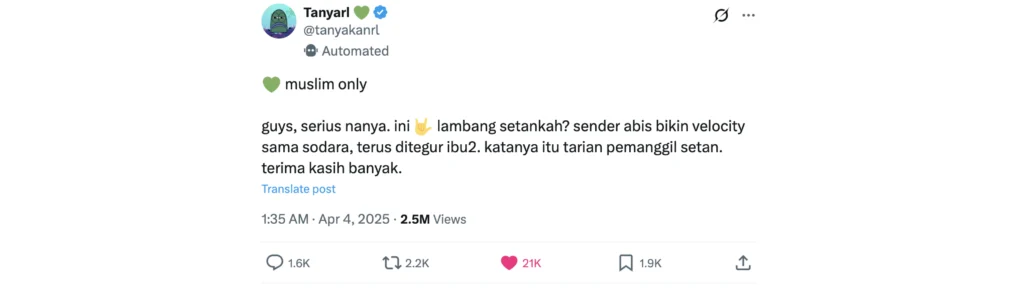
In the post above, the sender asks if Velocity is a symbol of Satan, as this trend began to grow during the Muslim month of Ramadan. It even mentions that some mothers believe that the Velocity trend summons demons. However, is this actually true?
Not only does the post question the hidden meaning behind the Velocity trend, but in the reply section of the same post above, another netizen questions the “hidden meaning” of the THR Dance trend in the following reply:

In the tweet above, the account @maijiwoo stated that her mother received a WhatsApp broadcast containing a video clip from the TikTok account @wajahlangsaa with the caption, “THR in Indonesia apparently imitates Jewish dance.” It can be seen that the message from the TikTok account has spread widely through WhatsApp chain messages, which are often used to spread hoaxes. So, is this information factual?
The Velocity trend is known as a video editing technique that adds dramatic effects to movements through speed manipulation, while the THR Dance trend is a light-hearted dance popular with Muslims ahead of Eid al-Fitr celebrations. While seemingly simple and entertaining, these two trends have drawn controversy after some social media users associated them with symbols deemed sensitive, such as accusations of satanism in the Velocity gesture and allegations of cultural plagiarism in the THR Dance.
This article aims to explore this phenomenon in greater depth, examining it from various cultural, social, and digital perspectives, and attempting to place the emerging controversies within a broader framework so that the public can more clearly understand the dynamics behind these viral trends.
A. Velocity Trend and Accusations of Satanism Symbols
The Velocity trend is essentially a video editing technique that uses movement speed effects (slow motion and acceleration) that dynamically follow the beat of the music. Many content creators, including K-Pop idols, use this technique to enhance their dance videos, creating a stunning visual aesthetic.
The movements in the Velocity trend can be seen in this video. (Note: The video uses animation to maintain privacy, avoid copyright infringement, and adhere to journalistic ethics.)
In many Velocity videos, we can see various expressive hand gestures, including the following:
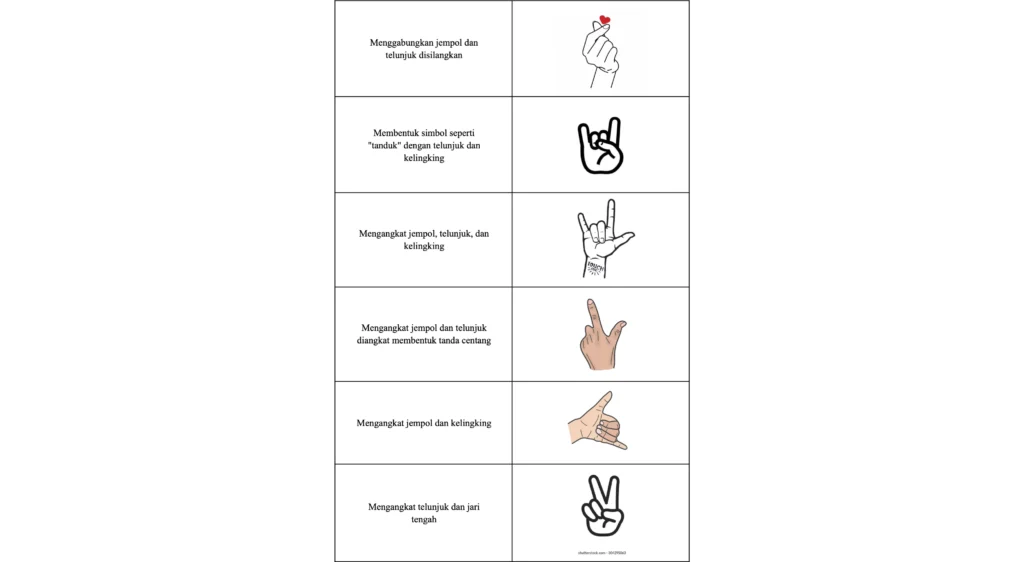
However, some have highlighted the hand gestures in Velocity’s videos, which they consider similar to satanic symbols, such as the two-fingered hand gesture (devil’s horns) or the metal symbol (raised thumb, index finger, and little finger). Several posts on social media platforms like Facebook and Instagram have described this trend as a form of covert occult symbolism spreading among young people. Some of these posts can be seen at the following link:
- https://www.facebook.com/groups/945070153098176/posts/1773971843541332/
- https://www.instagram.com/updatelokerjambi/p/DIAeRE-z0HI/?img_index=1
- https://www.instagram.com/fuadbakh23/reel/DIA3GrsSQLg/
- https://www.tiktok.com/@aku_cenot/video/7488657716529941768
So, what is the truth?
The hand gestures in the Velocity video have indeed given rise to various interpretations. One of the most frequently highlighted is a gesture resembling the “sign of the horns”—the index finger and pinky finger raised, while the other fingers are folded (sometimes with a raised thumb). In certain social media narratives, this symbol is accused of being part of a covert spread of occult values or even Satanism. However, the reality is not that simple. This gesture has a highly contextual history and meaning, depending on who uses it, in what culture, and for what purpose.
The sign of the horns has various versions. For example, in the United States, this hand gesture is known as the Hook ‘Em Horns, the official symbol of the University of Texas at Austin since 1955, used as a show of support for their football team (Texas Longhorns, n.d.). This symbol depicts the horns of a bull—their proud mascot—and has no occult connotations whatsoever. In fact, prominent Texan politicians like George W. Bush frequently use it in public as a show of solidarity with local identity.
 Image Source: Texas Longhorns
Meanwhile, there is also a similar but very different version, namely the ILY (I Love You) sign in American Sign Language (ASL). This gesture combines the letters I, L, and Y and is used by the deaf and speech-impaired community to express affection (Ferreiro, 2019). This sign has been used by deaf students in the US and has been widely recognized since it was first popularized in 1976 by Richard Dawson, host of Family Feud. This means its use in public spaces has been known for over 40 years. In this context, the symbol, which visually resembles “horns,” actually means love, not a curse.

Image Source: GBI Sukawarna Bandung
However, in a more conspiratorial narrative, some circles associate this symbol with Freemasonry and “El Diablo”—a secret sign to identify fellow members or a form of respect for a demonic entity. This view is often circulated in conspiracy literature, which interprets every appearance of the symbol as a sign of membership in a global elite network or part of a grand plan for the New World Order. According to a 2014 article by the Hidayah Lovers Club on WordPress, this symbol is associated with conspiracies involving occult rituals, devil worship, and the global elite, who are said to be involved in hidden agendas such as the New World Order. It is also shown that many public figures use this symbol openly, which is interpreted as a form of secret communication between members of the group. However, such views are often speculative and not based on solid contextual studies.

Image Source: GBI Sukawarna Bandung
What’s interesting is how the same symbol can be interpreted very differently in different cultures and contexts. In popular culture, particularly in heavy metal music, the “sign of the horns” has long been a powerful symbol of artistic expression. It’s not just a gesture, but a representation of rebellion, freedom of expression, and solidarity between communities.
This symbol serves as a form of collective identification among metal fans, creating a sense of emotional connection in performative spaces like concerts. Ronnie James Dio, the legendary vocalist of the band Black Sabbath, was instrumental in popularizing this gesture in the music world (Chakim, 2024). However, what is often overlooked is the cultural background behind this choice. Dio stated that the hand gesture was inspired by his grandmother, who came from Southern Italy. There, the gesture is known as malocchio, a protective symbol to ward off evil energy or bad luck. Thus, the origins of this gesture are rooted in apotropaic traditions—that is, an attempt to protect oneself from negative influences, rather than inviting and/or symbolizing negative meanings.
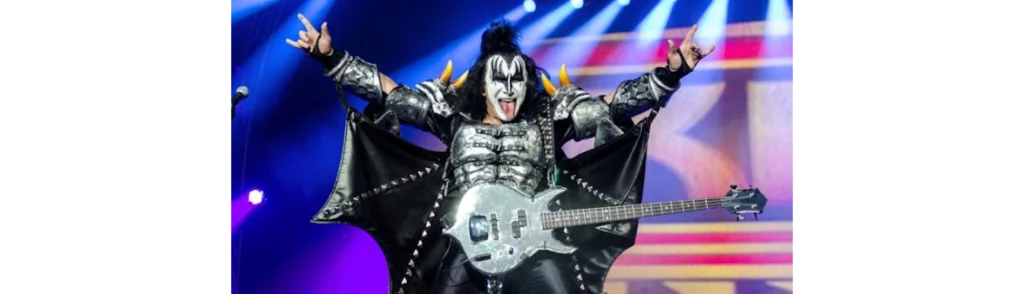
Image Source: Unusualverse
B. THR Calling Dance: When Foreign Culture Infiltrates Through Joget
In addition to the Velocity trend, controversy also emerged surrounding the viral “THR Dance” ahead of Eid 2025. This viral THR dance on TikTok is performed with light, cheerful movements—such as steps to the right and left, then small jumps back and forth—and is performed simultaneously by many people while forming a line behind them. When the dance is finished, each dancer receives THR money. An animation illustrating the movements can be seen in the following video.
(Note: The video uses animation to protect privacy, avoid copyright infringement, and adhere to journalistic ethics.)
Although initially seemingly ordinary, some netizens accused the movements of resembling a traditional Jewish dance called the Hora. This dance is quite popular in Israel and several Eastern European countries. It is typically performed in a circle, with synchronized and energetic footwork as a form of community joy and togetherness (Priyani, 2025). An example of the Hora Dance video can be seen here.
The similarity of these movements has sparked accusations of cultural plagiarism, and even raised suspicions that foreign culture—particularly related to Judaism or Israel—is being deliberately inserted into local content. This accusation stems from negative perceptions of Israel, particularly due to the ongoing conflict with Palestine. Many people associate symbols or culture associated with Israel with acts of violence against Palestinians.
Because of this, what should be neutral topics like dance moves or cultural symbols can become sensitive issues. In this case, the issue isn’t simply about imitating a dance, but rather about identity, the history of conflict, and how certain symbols can trigger emotions and debate in the public sphere.
So, what’s the truth?
In reality, the dance is not Jewish in origin. According to various sources, the dance, which has been called “controversial” in several public debates, actually more closely resembles Letkajenkka, a Finnish folk dance that has been popular since the 1960s. This dance is a modern form of jenkka, a type of Northern European folk dance similar to polka, and has a fast tempo and repetitive rhythm (Gegung, 2025).
According to research by the FactMeter Team, Letkajenkka reached its peak of global popularity after a Finnish musician named Rauno Lehtinen created the song “Letkis” (or “Letkiss”) in the early 1960s. The song spread throughout the world, and the Letkajenkka dance became a cross-cultural phenomenon, performed in schools, community events, and even on television programs in various countries. In Japan and several other Asian countries, the dance has even been taught as part of physical education or in children’s art performances.
Letkajenkka is known for its simple yet energetic movements. This dance is usually performed in a line formation or holding hands, with rhythmic steps moving forward, backward, and sideways. This creates a sense of joy, togetherness, and unity of movement among the dancers. In the context of Finnish culture, the movements represent the spirit of collective work and the spirit of rural communities, especially those who work outdoors or in dense forests.
Etymologically, the word jenkka itself is often associated with images of forest workers or lumberjacks—professions closely associated with Finland’s national identity as a country rich in forests and wildlife. The word letka, meanwhile, means “line,” referring to the formation of dancers moving together in a rhythmic manner, illustrating order and social cohesion. For the full video, please access it here.
Pop Culture, Global Context, and the Challenges of Interpretation
Phenomena like Velocity and the THR Dance reflect the dynamic nature of popular culture in the digital age. Pop culture is no longer simply consumed passively, but is also created, modified, and re-distributed by internet users from various social, cultural, and religious backgrounds. In this process, the meaning of a symbol, gesture, or visual expression can change rapidly—shifting from its original meaning or even acquiring new interpretations never intended by its creator.
Social media like TikTok enable trends to spread across borders in a matter of seconds. However, this speed of virality is often not accompanied by a rapid understanding of the cultural context behind a trend. When a gesture or dance becomes popular, some users will enjoy it as entertainment, while others may be disturbed or offended, seeing it as a form of harassment, deviance, or the infiltration of foreign values.
This is where media literacy becomes crucial, namely the ability to critically read, interpret, and verify information amidst the flood of digital content. Media literacy helps us not only see what appears on the surface but also ask: where did this trend originate? What is its historical and cultural context? Does this symbol have a uniform meaning across time and place?
Simultaneously, cultural awareness is crucial to avoid perceptual bias. In the era of globalization, cultural symbols increasingly shift across borders. A gesture with a positive meaning in one region may have a negative connotation in another. If not handled wisely, these differences in interpretation can trigger conflict, prejudice, or even reinforce baseless conspiracy narratives.
Rather than immediately labeling a trend as “satanic,” “cultural infiltration,” or “dangerous,” it’s important to prioritize clarification and critical reading. Viral moments like this can actually provide a public educational space to introduce the history of symbols, understand the plurality of meanings, and encourage open cross-cultural discussion. In this complex cyberspace, we all have a role to play in creating an inclusive atmosphere, where criticism remains possible, but must be based on a comprehensive understanding, not merely assumptions or collective fears.
Conclusion
The Velocity trend and the THR dance are clear examples of how digital creativity is more than just fleeting entertainment. Both demonstrate how seemingly light and popular content can develop into a field of interpretation, controversy, and even serious identity debate. Accusations of certain symbols—whether related to Satanism or foreign culture—demonstrate that the digital space is a mirror of broader socio-political dynamics: about who has the right to determine meaning, who feels threatened, and how cultural identity is negotiated in a very open yet boundary-laden space.
In this context, it is important to emphasize that freedom of expression in digital culture must go hand in hand with cultural responsibility. Content creators need to be aware that their work can be interpreted differently, while audiences also need to have the humility to realize that not everything can and/or should be interpreted in a black-and-white manner. Dialogue is key to bridging differences, while media literacy is a tool to prevent the public from easily falling prey to disinformation or sensationalism.
Furthermore, this phenomenon also reminds us that the digital world is not a neutral space. It’s filled with intersecting narratives, ideologies, and interpretations. In situations like this, a reflective approach becomes crucial: it’s not enough to simply ask what’s viral, but also why it’s viral, who benefits or is harmed, and how we, as the public, can wisely respond.
Therefore, learning to understand the meaning of symbols, respect cultural diversity, and be critical of viral narratives is not only an individual responsibility but also part of the collective process of building a healthy digital discussion space.
As audiences, as internet users, we are expected to be more critical and open to all news and culture in cyberspace. We should not only be open to new trends and accept all information at face value, but also open to discussion, conduct research, and cross-check the facts to avoid hoaxes.
References
Website:
- Chakim, M.N. (2024, Juli 23). Penggemar Musik Metal Wajib Tahu, Sejarah Ikon Metal Devil Horns atau Metal Horns. Retrieved from https://kedu.suaramerdeka.com/gaya-hdiup/2113188130/penggemar-musik-metal-wajib-tahu-sejarah-ikon-metal-devil-horns-atau-metal-horns
- Ferreiro, Emilio. (2019, Juni 12). The Sign I Love You of Sign Language: Meaning, Origin, Curiosities and Celebrities. Retrieved from https://www.unusualverse.com/2019/06/i-love-you-sign-origin-curiosities-celebrities.html
- Gegung, C.M. (2025, April 4). Asal Usul Tarian “THR” Yang Viral di Medsos. Retrieved from https://www.rri.co.id/hiburan/1433356/asal-usul-tarian-thr-yang-viral-di-medsos
- Priyani, Agis. (2025, April 4). Apa Itu Tarian Hora Yahudi? Tarian yang Mirip dengan Tarian THR yang Viral di Indonesia. Retrieved from https://bangka.tribunnews.com/2025/04/04/apa-itu-tarian-hora-yahudi-tarian-yang-mirip-dengan-tarian-thr-yang-viral-di-indonesia#:~:text=TARIAN%20HORA%20YAHUDI%20%2D%2D%20Tarian,mempelai%20di%20kursi%20sambil%20menari.
- Club Pecinta Hidayah. (2014, Mei 30). Setanisme Ekspos; “El Diablo” (Sinyal Tiga Jari). Retrieved from https://clubpecintahidayah.wordpress.com/2014/05/30/setanisme-ekspos-el-diablo-sinyal-tiga-jari/
- Texas Longhorns. (n.d). Traditions: Hook ’em, Horns hand signal. https://texaslonghorns.com/sports/2013/7/28/traditions_0728135417.aspx?id=265
X:
- https://x.com/tanyakanrl/status/1907864447588213082
- https://x.com/maijiwoo/status/1908066235004444950
Video:
- https://www.tiktok.com/@tickle.fickle/video/7489830893696191752?q=Velocity%20animasi&t=1744039818484
- https://www.tiktok.com/@fantasticfami/video/7487232749078711560?q=tren%20tari%20thr%20animasi&t=1744043014827
- https://www.instagram.com/aishamaharani/reel/DH_WwQ0TD4h/
- https://www.youtube.com/watch?v=vvretYJ8sh8
- https://www.facebook.com/groups/945070153098176/posts/1773971843541332/
- https://www.instagram.com/updatelokerjambi/p/DIAeRE-z0HI/?img_index=1
- https://www.instagram.com/fuadbakh23/reel/DIA3GrsSQLg/
- https://www.tiktok.com/@aku_cenot/video/7488657716529941768